Regenerative Endodontics: Reviving the Pulp–Dentin Complex
For most of the twentieth century, the goal of endodontic treatment was straightforward: remove infected pulp tissue, disinfect the canal, and seal it. Regenerative endodontic procedures (REPs) reframe that goal. Instead of replacing the pulp with an inert filling, they attempt to re-establish living, functional tissue inside the root canal system, and, in immature teeth, to allow root development to continue.
Why immature teeth are the priority
When a permanent tooth loses pulp vitality before its root has finished forming, usually from trauma or deep caries, the root is left with thin walls and an open apex. These teeth are fragile and notoriously difficult to treat with conventional techniques, because there is no natural apical stop against which to compact a filling.
Traditional management relied on apexification, creating an artificial barrier with calcium hydroxide or, more recently, a bioceramic plug such as MTA or Biodentine. Apexification seals the tooth, but it does not strengthen the root or restore vitality. REPs aim to do both.
How a regenerative procedure works
The biological rationale rests on the classic tissue-engineering triad: stem cells, scaffolds, and signaling molecules. In a typical protocol:
- Disinfection without aggression. The canal is irrigated with low concentrations of sodium hypochlorite followed by EDTA, deliberately avoiding strong chemicals or heavy instrumentation that would harm the residual stem cells in the surrounding tissues. Mechanical filing of the canal walls is minimal.
- Intracanal medication. A calcium hydroxide or low-concentration antibiotic paste is placed for one to four weeks to control infection.
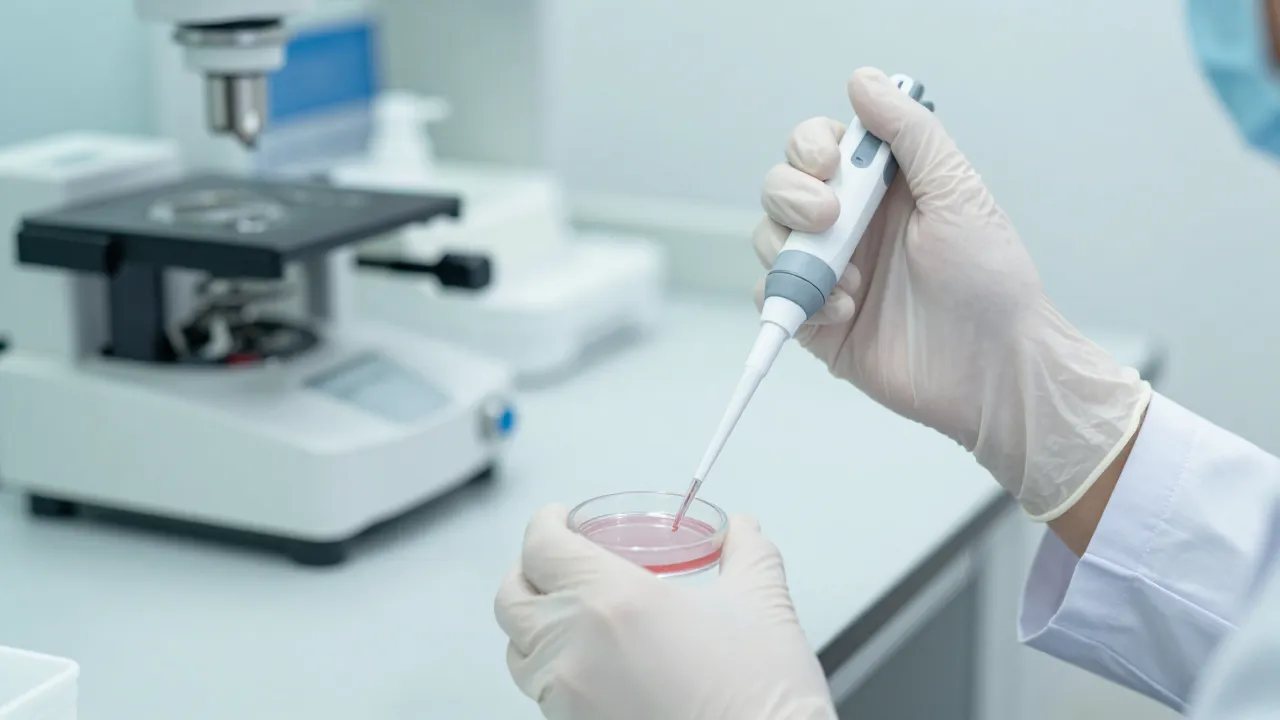
- Inducing a blood clot or scaffold. At the second visit, bleeding is provoked from the periapical tissues into the canal, drawing in stem cells from the apical papilla. A blood clot, or a platelet-rich fibrin (PRF) scaffold, then serves as the matrix for new tissue.
- Coronal seal. A bioceramic barrier is placed over the scaffold and the access is restored, protecting the regenerating tissue from the oral environment.
The stem cells of the apical papilla (SCAP) are central to this process, which is why preserving the periapical tissues during disinfection matters so much.
What the evidence shows
Both the American Association of Endodontists, through its Clinical Considerations for a Regenerative Procedure, and the European Society of Endodontology, in its position statement, have published guidance reflecting a maturing but still-evolving body of evidence. A few themes are consistent across the literature:
- Resolution of infection and symptoms is highly predictable. Most studies report that signs and symptoms of apical periodontitis resolve and the tooth is retained, the primary clinical goal.
- Continued root development is real but variable. Increases in root length and dentinal wall thickness are frequently observed, but the amount differs widely between cases and is hard to guarantee.
- The new tissue is repair, not a true pulp. Histological studies suggest the tissue forming inside the canal often resembles cementum-, bone-, or periodontal-like tissue rather than a perfect replica of the original pulp–dentin complex. Functionally useful, but not a literal regeneration.
Practical considerations
REPs are technique-sensitive and depend on careful case selection. They are most appropriate for immature, nonvital teeth with a healthy reservoir of periapical stem cells. Common challenges include obtaining adequate bleeding into the canal, the risk of coronal discoloration from some antibiotic pastes and bioceramic materials, and the need for long-term follow-up to confirm continued development.
Where the field is heading
Research is moving beyond the blood-clot model toward more controlled approaches: PRF and other autologous scaffolds, custom hydrogels, dentin-derived growth factors, and eventually cell-based therapies that deliver stem cells directly. The ambition is to make the outcome less dependent on the patient's own bleeding response and more reproducible.
Regenerative endodontics is one of the most promising directions in the specialty precisely because it changes the question, from "how do we best fill this canal?" to "can we help this tooth heal itself?" For young patients with traumatized teeth, that shift can mean keeping a natural, developing tooth for a lifetime.
This article is for general educational purposes and is not a substitute for individualized advice from a qualified dentist or endodontist.